To hire a conference MC in NZ, define your event’s tone and run-sheet complexity, shortlist facilitators with live room-reading skills, review unedited stage footage, and check their interviewing ability. Lock in your booking three to six months out, confirm travel and GST terms, and run a pre-event briefing to align on energy and transitions.
What is a Conference MC?
A conference MC (Master of Ceremonies) is the onstage host and facilitator responsible for holding a live event together from opening welcome to final wrap-up. Rather than simply reading speaker bios off cue cards, an effective MC manages room energy, bridges thematic gaps between sessions, keeps the programme running to time, and handles unexpected technical or scheduling hiccups calmly.
For event organisers and podcast hosts stepping into live events, the MC acts as the human glue between your stage content and your audience's attention.
Why Does Your Choice of Conference MC Matter So Much in NZ?
New Zealand's business events sector is a serious economic engine, with research from Business Events Industry Aotearoa (BEIA) showing that multi-day conferences support $925 million in annual economic activity across Aotearoa. Meanwhile, domestic and international conferences are drawing record investment across venues from Auckland's NZICC to Tākina in Wellington.
When delegates invest days away from their desks—and organisers invest tens of thousands of dollars into venues, catering, and keynote talent—the person holding the microphone between sessions determines whether the room stays engaged or drifts off. A strong keynote speaker owns 45 minutes; a conference MC NZ professionals rely on owns every single transition across the entire day.
From the Stage: A Lesson in Reading the Room
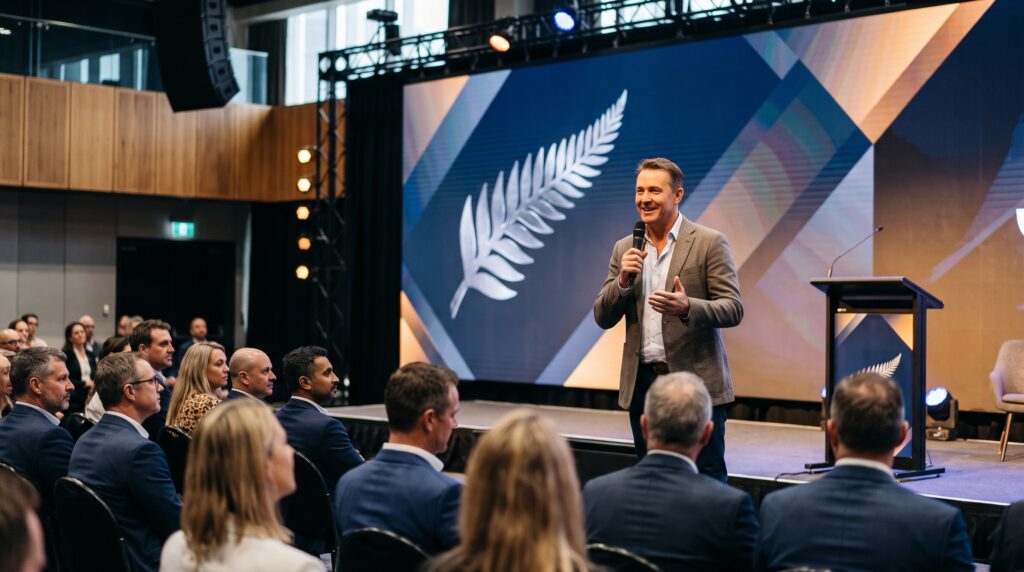
A couple of years back, I was MCing a full-day leadership summit in Auckland where a major afternoon panel ran 20 minutes late due to a flight delay out of Wellington. The room was warm, post-lunch energy had dipped, and delegates were checking their phones. Instead of stalling with awkward small talk, I turned the room into a five-minute rapid-fire peer debrief on the morning's biggest leadership takeaway—getting everyone standing, talking to someone new, and trading real challenges. By the time the panellists walked on stage, the energy in the room had completely reset. Good MCing isn't about filling silence; it's about reading what the room needs in that exact moment.
How Do You Hire a Conference MC in NZ? (Step-by-Step)
- Define the Role Beyond "Timekeeper"Clarify what you actually need on stage. Are you looking for crisp housekeeping and warm introductions, or do you need someone to moderate Q&A panels, conduct live podcast-style fireside chats, and energise a tired room after lunch? Write down your top three outcomes before looking at talent.
- Set a Realistic New Zealand BudgetIn New Zealand, professional MC fees typically range from $1,500 to $10,000+ NZD excluding GST, depending on profile, event duration, and preparation requirements. Factor in airfares, accommodation, and ground transfers early if you are flying talent from Auckland, Wellington, or Christchurch to regional centres.
- Shortlist Based on Tone and Cultural FitKiwi audiences respond poorly to overly rehearsed, loud "hype" styles. Look for hosts who bring natural warmth, dry humour, and genuine curiosity. Ensure they understand local context—including basic tikanga, accurate pronunciation of te reo Māori names and place names, and the nuances of your specific industry.
- Watch Unedited Stage Footage (Not Just Highlight Reels)A two-minute sizzle reel with upbeat music tells you very little about how someone handles a flat room at 3:30 pm. Ask for a 5-to-10-minute unedited clip showing how they open a session, introduce a speaker, or facilitate audience Q&A.
- Interview for Preparation Habits and AdaptabilityJump on a 15-minute video call with your top two or three candidates. Ask how they prepare for speakers they haven't met, how they handle a keynote running 15 minutes over time, and what questions they ask organisers before stepping on stage. (If you're exploring how to structure stage conversations, check out our guide on Leading High-Trust Conversations on Stage and Mic).
- Confirm Logistics, Agreements, and Briefing SchedulesOnce you select your MC, lock in the date with a clear agreement covering call times, rehearsal expectations, AV requirements (such as lapel vs. handheld mics and comfort monitors), and cancellation terms. Schedule a formal run-sheet briefing two weeks prior to the event.
Which Type of Event Host Fits Your Conference Best?
Not every conference needs a high-profile celebrity comedian, and not every internal facilitator can hold a 500-person ballroom. Use this comparison to match the host style to your event format:
| Host Type | Best Suited For | Typical NZ Fee Range (Excl. GST) | Key Strength | Watch-Out |
| Professional Conference MC / Facilitator | Industry summits, leadership forums, multi-track conferences | $3,000 – $6,500+ | Room-reading, energy management, panel moderation, seamless transitions | Book early (3–6 months out) for peak spring/autumn dates |
| Celebrity / Media Personality MC | Gala dinners, awards nights, major public-facing expos | $5,500 – $10,000+ | Instant name recognition, ticket-selling appeal, polished broadcast delivery | May have less bandwidth for deep pre-event content integration |
| Podcast Host / Live Interviewer | Fireside chats, creator summits, conversational conferences | $2,500 – $5,500 | Deep listening, unscripted follow-up questions, authentic rapport | Needs clear run-sheet boundaries to keep strict schedule timing |
| Internal Executive / Team Member | Small internal offsites, team town halls (under 80 people) | $0 (Internal time) | Deep company knowledge and existing staff relationships | Often too close to the content to manage objective timing or energy shifts |
What Should You Look for in an MC's Media Kit and Briefing Pack?
When reviewing candidates—or exploring options via the Rob Media Kit—look beyond a list of past clients. A strong MC resource should clearly show:
- Clear thematic positioning: Does their leadership and speaking background align with the tone you want delegates to walk away feeling?
- Live facilitation examples: Evidence of panel moderation, audience interaction, and live interviewing alongside traditional announcements.
- Technical and stage requirements: Straightforward AV specs so your production crew isn't guessing on bump-in morning.
- Testimonials from event producers: Feedback specifically mentioning reliability, preparation, and adaptability under pressure.
Frequently Asked Questions About Hiring a Conference MC in NZ
How far in advance should I book a conference MC in New Zealand?
For major conferences between March and May or August and November—New Zealand's busiest event seasons—aim to book your MC three to six months in advance. For large multi-day national summits or high-profile hosts, booking six to nine months ahead secures your first choice before diaries fill up.
What is the difference between a conference MC and a keynote speaker?
A keynote speaker delivers a dedicated 30-to-60-minute presentation on a specific subject. A conference MC acts as the anchor for the entire event—welcoming delegates, framing why each speaker matters, managing room energy, facilitating Q&A sessions, and keeping the schedule on track from start to finish.
How much does a conference MC cost in NZ?
Professional conference MC NZ rates generally sit between $1,500 and $10,000+ NZD (plus GST) depending on the host's experience, public profile, and whether you require a half-day, full-day, or multi-day commitment. Travel, accommodation, and evening gala duties are typically quoted separately.
Can a podcast host make a good conference MC?
Yes, especially for modern conferences that prioritise conversational fireside chats and unscripted panels over stiff formal speeches. However, ensure your chosen podcast host also has live room-management experience, as projecting energy to 300 people in a ballroom requires different pacing than speaking into a studio microphone.